


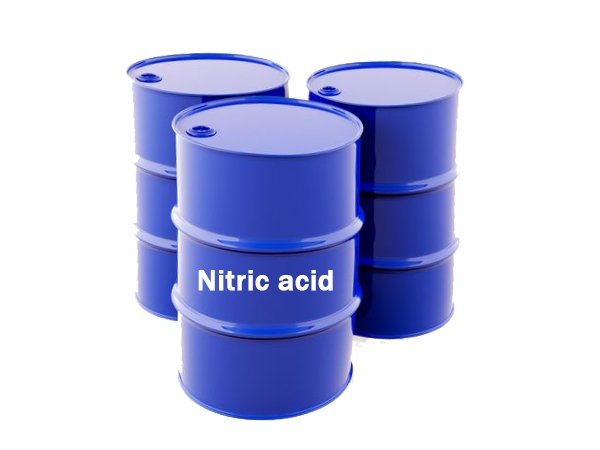

Here is the text adapted for Nitric Acid , structured and written in the exact style of your triethylene glycol (TEG) example:
Fertilizer Production: Nitric acid is primarily used in the agricultural industry for the manufacture of nitrogen-based fertilizers, most notably ammonium nitrate. It is reacted with ammonia to produce ammonium nitrate, which provides a highly concentrated and readily available source of nitrogen essential for boosting crop yields and supporting global food production.
Explosives Manufacturing: Nitric acid is a critical ingredient in the defense and mining industries for manufacturing explosives. Through a chemical process called nitration, it is used to produce highly energetic compounds such as TNT (trinitrotoluene), nitroglycerin, and nitrocellulose, which are vital for both military munitions and civilian blasting operations.
Metal Etching and Pickling: In metallurgy, nitric acid is used as a powerful etching and pickling agent. It is applied to stainless steel and other alloys to dissolve surface impurities, oxides, and scale. Additionally, it is used for passivation—a process that cleans the metal surface and helps form a protective, corrosion-resistant oxide layer.
Rocket Propellant: Nitric acid, specifically in highly concentrated forms like Red Fuming Nitric Acid (RFNA), is utilized as an oxidizer in liquid-fueled rocket engines. Its high reactivity makes it an effective oxidizer when paired with hypergolic fuels (fuels that ignite spontaneously upon contact), which is crucial for military missiles and spacecraft propulsion.
Chemical Intermediate: Nitric acid serves as a vital precursor in the synthesis of various industrial chemicals. It is heavily consumed in the production of adipic acid (a primary building block for making nylon) and nitrobenzene (which is processed into aniline, a precursor used in polyurethanes and synthetic rubbers).
Laboratory Reagent: In analytical chemistry, nitric acid is widely used as a high-purity laboratory reagent. It is the gold standard for “acid digestion,” a sample preparation technique where it dissolves solid metal samples into liquid solutions so they can be analyzed using advanced spectrometry equipment.
Cleaning Agent: In the food, beverage, and dairy industries, nitric acid is utilized in specialized Clean-In-Place (CIP) systems. Its strong acidity and oxidizing properties make it exceptionally effective at removing inorganic milk stone, calcium scale, and mineral deposits from stainless steel processing pipes and tanks.
Wood Aging and Treatment: Nitric acid is used in woodworking as a chemical stain to artificially age wood, particularly maple and pine. When a diluted solution is applied, it reacts with the natural tannins in the wood to produce a distinct, deep-toned, rustic appearance that mimics decades of natural weathering.
Dye and Pigment Synthesis: Nitric acid is used as a nitrating agent in the manufacture of intermediate chemicals for the dye and colorant industries. It is essential for synthesizing various organic pigments and azo dyes used to color textiles, plastics, and industrial coatings.
.
Reviews
No reviews have been posted yet.